
Central Conveying System

Central Conveying System
Central Conveying System: A Professional Solution for Automated Material Handling
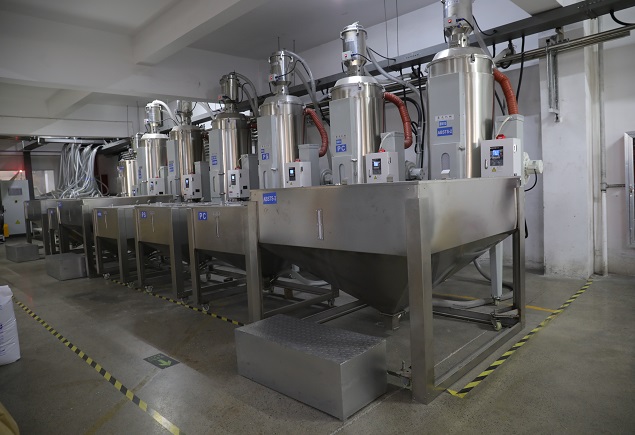
The Central Conveying System is a material handling and management solution designed for automated production lines in industries such as injection molding, chemical processing, and food manufacturing. It centralizes the raw material storage, drying, and conveying processes of multiple production machines under a single central control panel, enabling 24/7 uninterrupted, unmanned, and precise material feeding.
Compared with traditional manual or machine-side feeding methods, the Central Conveying System offers significant advantages:
1. Significant Improvement in Production Efficiency and Product Quality
Automation and Continuity: The system enables 24/7 automatic material feeding, drastically reducing manual handling costs, waiting time for material loading, and production stoppages due to material shortages, thereby ensuring continuous and stable production.
Precision Control: The central control panel allows precise setting of material ratios, conveying volumes, and feeding schedules for each material type, ensuring that each machine receives perfectly consistent materials. This improves the consistency of product dimensions, color, and performance, reducing defect rates.
Raw Material Protection: Materials are conveyed through sealed pipelines, preventing secondary contamination caused by manual bag opening and pouring. When integrated with a central dehumidifying and drying system, it effectively prevents material moisture absorption – a critical factor for producing high-performance engineering plastic parts (e.g., automotive components, precision electronic parts).
2. Substantial Reduction in Operational Costs and Energy Consumption
Labor Cost Savings: Tasks that previously required multiple personnel for material handling, bag opening, loading, and dryer monitoring can now be managed by a single operator in a control room, saving over 70% in direct labor costs.
Reduced Material Waste: The system's precise metering eliminates material spillage, residue, and packaging waste associated with manual loading. The enclosed conveying eliminates dust and material spillage, typically keeping material waste rates below 2%.
Energy Savings: Decentralized machine-side dryers and blowers are replaced by a highly efficient central drying system and large-capacity fans. Centralized systems offer better heat recovery and insulation, reducing energy consumption by 20-40% compared to standalone units. Many systems also feature variable frequency drives for additional power savings.
3. Improved Factory Environment and Safety Standards
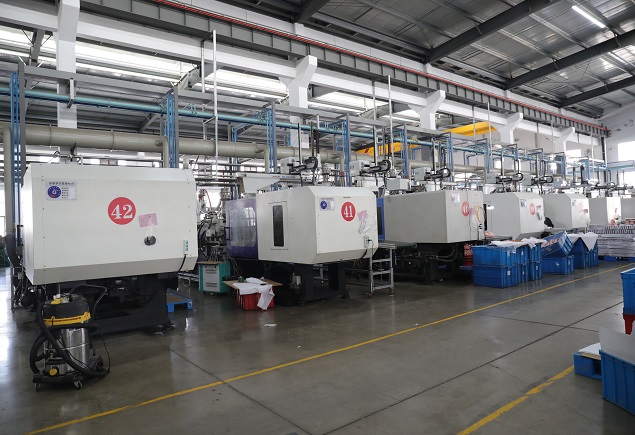
Cleaner Workshop Environment: The system eliminates dust generated by manual handling of bagged materials and removes cluttered machine-side blowers, dryers, and material bags. This results in a clean, organized workshop with a streamlined piping layout that saves valuable production floor space.
Noise Reduction: Decentralized blowers and vacuum pumps are relocated to dedicated equipment rooms or soundproof enclosures, significantly reducing noise levels on the production floor and improving the overall working environment.
Enhanced Safety: The system reduces personnel contact with hot drying hoppers and moving machinery, and eliminates safety risks such as crushing or sprain injuries from manually handling heavy materials, making the workshop significantly safer.
4. Enables Lean and Smart Manufacturing
Data Transparency: The central control system provides real-time monitoring of material consumption, drying temperatures, conveying status, and fault alarms for each machine. This data can be integrated with factory ERP/MES systems, providing an accurate basis for cost accounting, production scheduling, and performance management.
Rapid Changeover (SMED): For production tasks requiring frequent material or color changes (e.g., in small-scale injection molding shops), operators simply recall a preset recipe on the control panel. The system automatically purges the pipelines and switches materials, completing changeover in minutes – far faster than manual cleaning of machine hoppers.
Supports Factory Upgrades: As an integral component of smart manufacturing and digital workshops, the Central Conveying System serves as a foundational infrastructure for factories advancing toward Industry 4.0, enhancing overall corporate image and market competitiveness.
By enhancing automation, lean practices, and intelligent control, the Central Conveying System systematically addresses comprehensive pain points related to cost, quality, efficiency, environment, and management in manufacturing facilities.
African Fan Market In-Depth Analysis
How to use and maintain lithium batteries
Related Article


